Hydronic In-Floor Heating in Okotoks, AB
Project Heating & Plumbing installs hydronic in-floor heating systems in Okotoks for homes, basements, garages, shops and other heated spaces. Using warm water circulated through tubing in or below the floor assembly, radiant heating can provide quiet, even comfort while integrating with a properly designed boiler and hydronic system.


When to Consider Hydronic In-Floor Heating
Hydronic radiant heating is particularly well suited to projects where the heating system can be planned around the floor construction and intended use of the space.
You're Building or Completing a Major Renovation
New construction and major renovations provide an opportunity to plan tubing layout, heating zones and mechanical equipment before floors and finishes are complete. This can make integrating a hydronic system more practical than adding one after construction is finished.
You're Heating a Basement, Garage or Shop
Radiant floor heating is well suited to concrete-floor applications such as basements, garages, workshops and acreage buildings where heat can be distributed directly through the slab.
You Want Multiple Heating Zones
Hydronic systems can be divided into separate heating zones so different areas can operate based on their own thermostat and heating requirements. Proper zoning depends on the system layout, controls and circulator design.
You're Planning a Boiler or Hydronic System
Before the project is complete, we test the installed system, verify zone and control operation and review the basic system operation with you.
How We Install In-Floor Heating in Okotoks
A reliable radiant floor system starts with proper planning. We consider the heated space, floor construction, heating requirements and mechanical system before installing the tubing and controls.
Heating Load & System Planning
We review the size and construction of the space, intended use, floor assembly and heating requirements to determine how the radiant system should be designed and integrated with the mechanical equipment.
Tubing Layout & Installation
We plan and install the hydronic tubing based on the heating zones and floor construction. The installation method may vary depending on whether the system is being incorporated into a concrete slab, floor assembly or another suitable hydronic application.
Manifolds, Controls & Boiler Integration
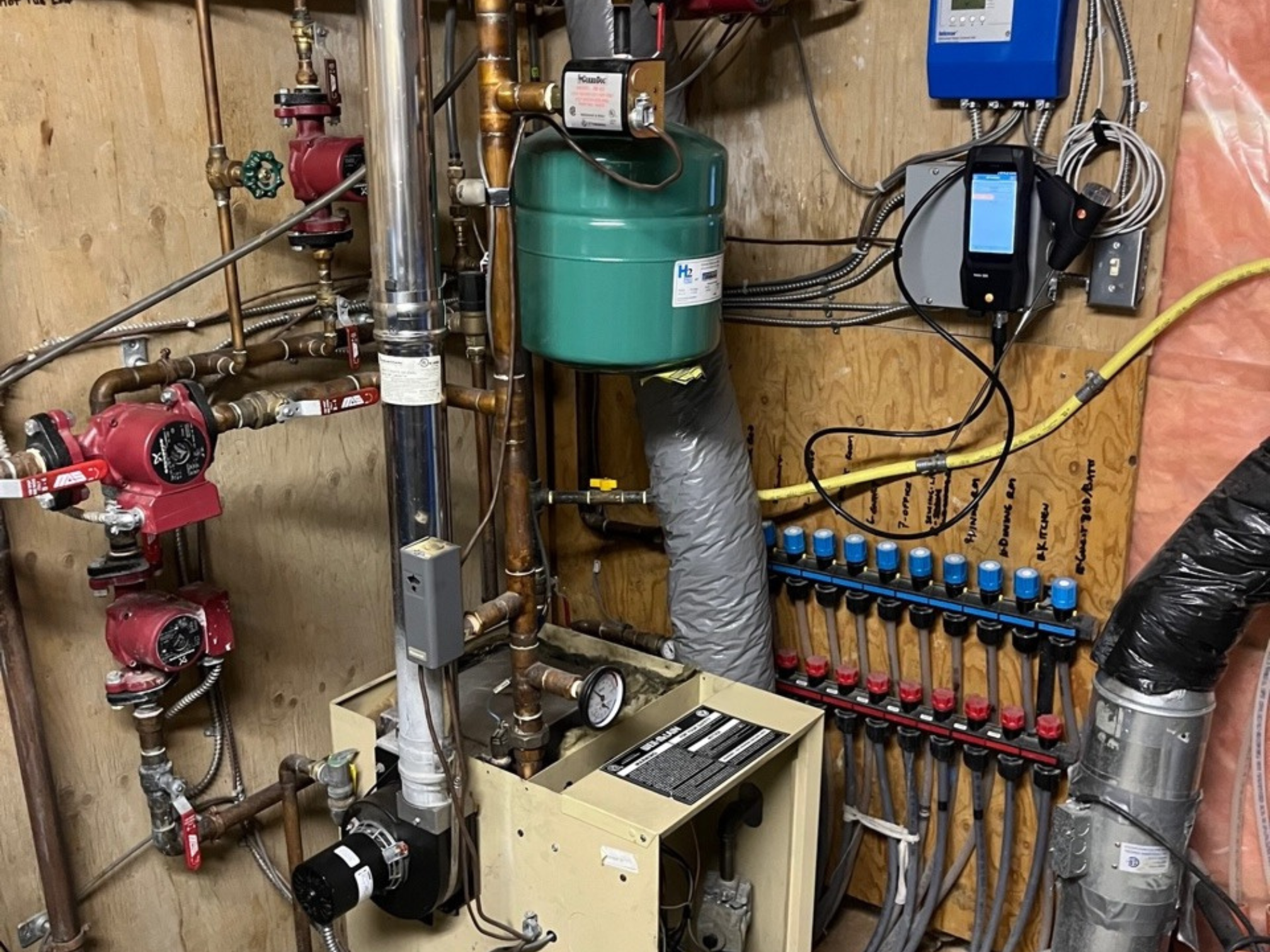
We connect the radiant zones to the required manifolds, circulators and controls and integrate the system with the boiler or hydronic heat source included in the project scope.
System Testing & Commissioning
Before the project is complete, we test the installed system, verify zone and control operation and review the basic system operation with you.
Benefits of Hydronic In-Floor Heating
Hydronic radiant heating offers several advantages when it is properly designed for the building and application.
Even Radiant Comfort — Heat is distributed across the floor surface rather than delivered from a few supply-air registers, which can provide comfortable and consistent heating throughout the space.
Quiet Operation — Radiant floors do not rely on a forced-air blower to distribute heat through the room, making the heating system itself very quiet during normal operation.
Flexible Zoning — Hydronic systems can be designed with multiple zones, allowing different areas to be controlled independently when the system layout and controls support it.
Works Well With Condensing Boilers — Radiant floor systems commonly operate at lower water temperatures than many traditional hydronic emitters, which can pair well with high-efficiency condensing boilers when the overall system is properly designed.
Related Services

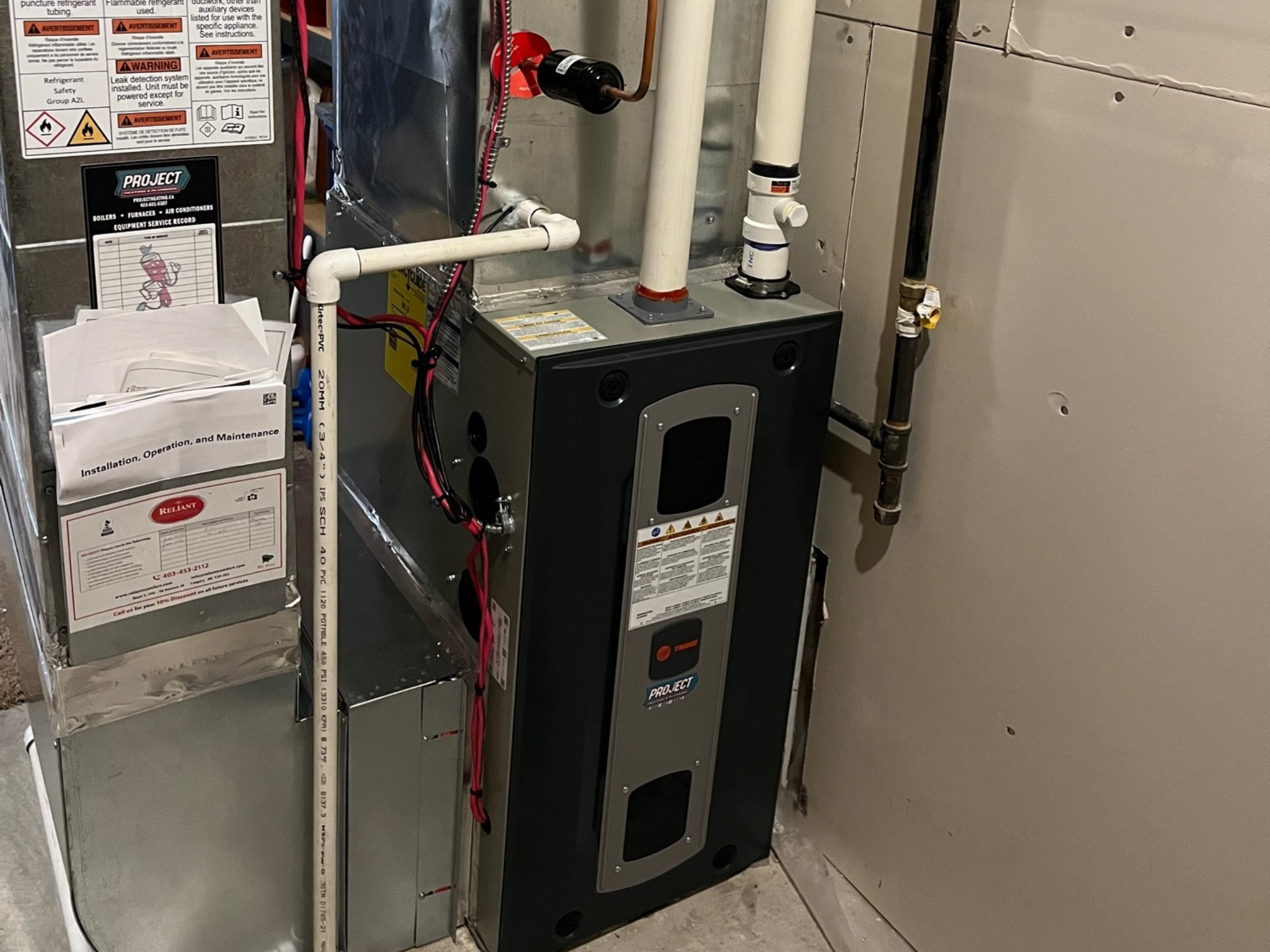
Furnace Replacement & Installation
Stay warm all winter long with expert furnace installation services from Project Heating & Plumbing. Serving Okotoks and surrounding areas, we specialize in energy-efficient heating solutions that keep your home comfortable and your energy bills low.

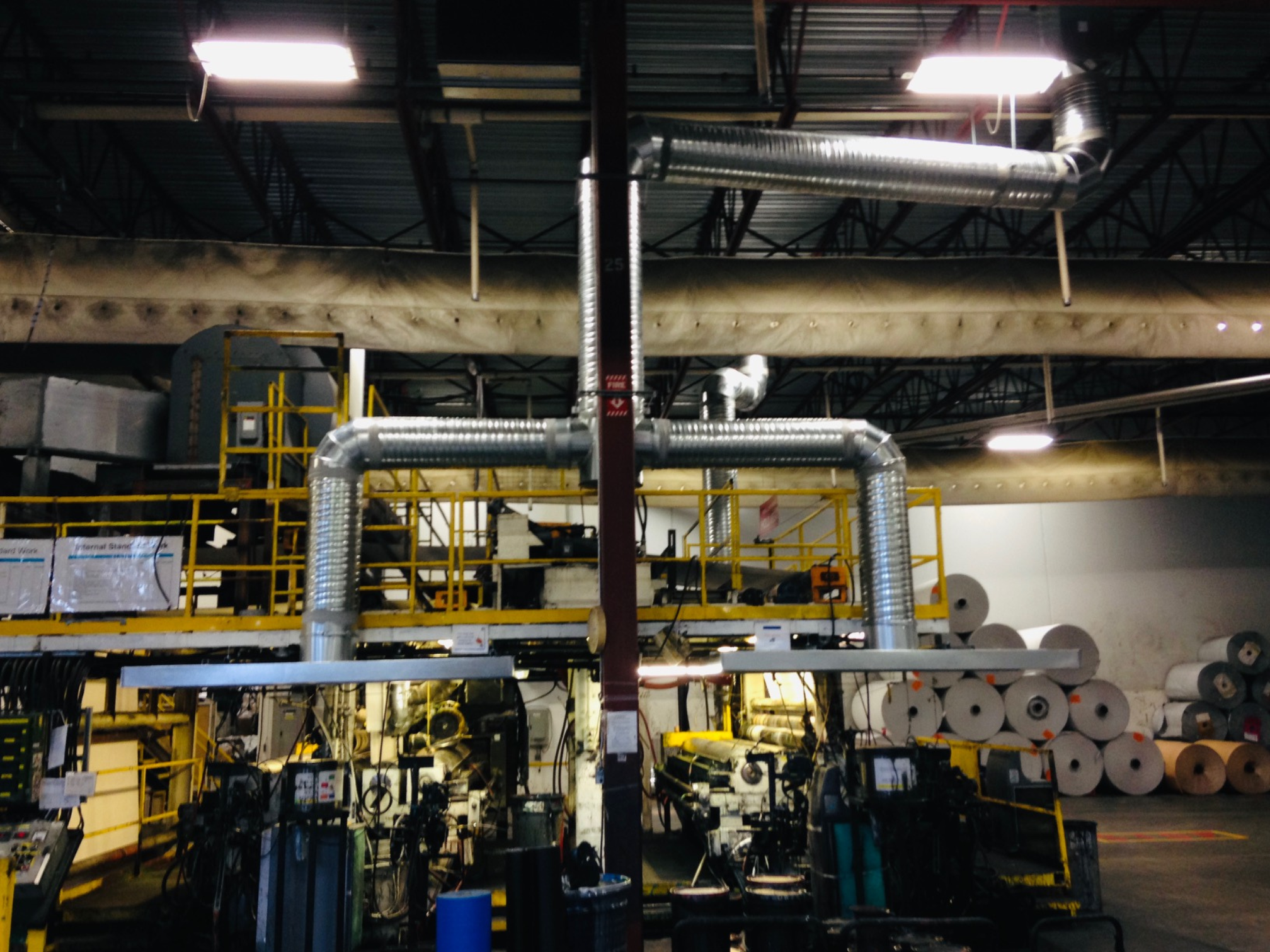
Custom Ductwork
Project Heating & Plumbing provides custom ductwork design, fabrication and installation in Okotoks for furnace replacements, renovations, basement developments and other HVAC projects. We assess the equipment, available space and airflow requirements before planning ductwork that fits the mechanical system and building.

Boiler Repair
Boiler not heating properly, losing pressure or leaving part of your home cold? Project Heating & Plumbing provides boiler repair in Okotoks for boiler faults, heating-zone problems, circulator issues, controls, leaks and other hydronic heating problems. We diagnose the system, explain what we find and provide clear repair options before approved work proceeds.
In-Floor Heating FAQs
Yes, but the floor construction and finished flooring need to be considered when the system is designed. Hydronic tubing may be installed in concrete slabs, suitable floor assemblies or other purpose-designed radiant systems. Different flooring materials transfer heat differently, so the floor covering and required water temperature should be considered as part of the design.
The cost depends on the size of the heated area, floor construction, number of heating zones, tubing and manifold requirements, controls and whether a boiler or other mechanical equipment is part of the project. New construction is generally easier to plan for than retrofitting an existing finished space. We review the project and provide a quote based on the actual scope.
A hydronic in-floor heating system requires a suitable source of heated water. A boiler is commonly used, but the appropriate heat source depends on the system design and application. We consider the radiant heating load, required water temperatures and any other heating or domestic hot-water requirements when planning the mechanical system.
Operating cost depends on the building's heat loss, insulation, thermostat settings, energy source, boiler efficiency and system operating temperatures. Radiant heating can perform efficiently when the building and hydronic system are properly designed, but actual energy use varies from one property to another.
The tubing itself typically requires little routine attention, but the complete hydronic system includes equipment such as the boiler or heat source, circulators, controls, expansion components and other mechanical-room equipment that should be inspected and maintained as appropriate for the system.
customer reviews

.png)
.png)